What Is Reactivity in Dogs? (A Practical Guide)
 Sue Kewley
Barking and lunging? A practical guide to dog reactivity.
Start your journey sign up for my free Arousal Checks Flow Chart
Barking and lunging? A practical guide to dog reactivity
If you’ve ever found yourself tightening your grip on the lead, holding your breath, and hoping nobody is watching… you’re not the only one. Maybe your dog barks at other dogs “out of nowhere”. Maybe they lunge at joggers, growl at visitors, or spin at the postman like it’s a full-scale emergency. And maybe you’ve had that horrible thought: What’s wrong with him? What’s wrong with me? Actually — nothing is wrong with you or your dog. Reactivity is usually a sign that your dog’s system is overwhelmed… and it’s far more common than most people realise.
What reactivity is in dogs (in plain English)
Reactivity is a big response to something that feels like too much. It might be another dog, a stranger, a bicycle, a noise, a person in a hat, a delivery van… sometimes it’s predictable, sometimes it feels completely random. A reactive dog might:
- Bark, lunge, growl, or snap (especially on lead)
- Freeze and stare… then suddenly explode
- Spin, whine, scramble, or try to escape
- Struggle to settle even after the trigger has gone
Here’s the analogy I use a lot: reactivity is like a smoke alarm that’s become too sensitive.
The alarm isn’t “bad” — it’s doing its job. It’s just going off when someone makes toast.
What causes reactivity? (What’s going on underneath)
When your dog spots a trigger, their nervous system makes a quick decision: safe or unsafe?
If the answer is “unsafe” (or even “not sure”), the body shifts into survival mode.
Stress hormones rise, the heart rate goes up, and the thinking brain is less available. Your dog isn’t choosing to be difficult — they’re trying to cope. In that state, it can look like they “know better”, but they can’t access those calmer skills in the moment.
Threshold: the point where learning stops
You’ll often hear behaviourists talk about threshold. In simple terms, it’s the point where your dog goes from “I can cope” to “this is too much.”
- Under threshold, your dog can notice the trigger and still stay connected to you — they can take food, respond to cues, and move away with you.
- Over threshold, your dog tips into survival mode. You might see barking, lunging, pulling, freezing, spinning — and it can take time for their body to settle again, even after the trigger has gone.
Most progress with reactivity comes from working under threshold as often as possible. This isn’t “avoiding the problem” — it’s giving your dog the safety and space they need to learn a different coping strategy.
What it feels like for you (and why it’s exhausting)
Reactivity doesn’t just affect dogs — it affects you too.
For most people, a walk can feel like bouncing from one incident to the next. You’re just trying to get through, recovering from the last blow-up, and bracing yourself for the next one… all while wondering, “What should I have done there?”
Do you tell your dog off? Do you move away? Do you distract? Do you stand your ground?
You end up trying bits of advice from all over the place — often from well-meaning but unqualified sources — and it can be miles away from what will actually help your dog.
It’s exhausting. And the hardest part is not knowing whether you’re making things better or accidentally making them worse.
And it affects your body too. Dogs are brilliant at picking up on how we feel. When you’re tense, holding your breath, or bracing for the next moment, your dog often feels that change as well.
A quick reset (for you)
- Pause and check in with yourself: calm and steady, or tight and stressed?
- Take 2–3 slow breaths and soften your shoulders and arms.
- Use a calmer voice and slower movement to help your dog feel safer.
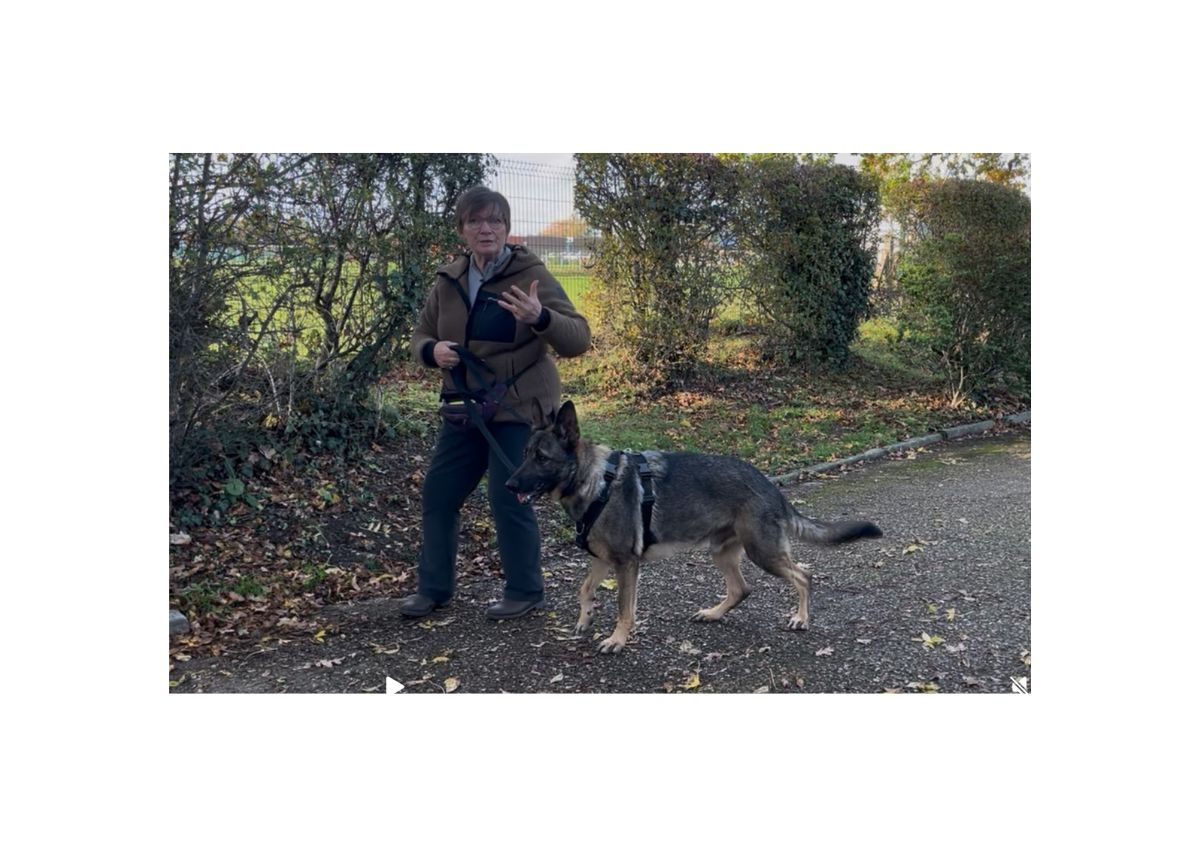
Small steps — but they can stop you both spiralling.(Image: reactive dog calmly watching a dog and jogger)

A steadier way forward (this week)
When you’ve been firefighting on walks, the most helpful shift is moving from “reacting” to having a few go-to decisions you can trust.
This week, keep it simple: create more breathing space and reduce how often your dog tips into survival mode.
- Pick quieter routes and times so you’re not constantly on edge.
- Use distance as your best tool — space gives your dog a chance to cope.
- Look for the early signs and move away sooner, before it escalates.
- Keep walks shorter, calmer, and sniffier while you rebuild confidence.
- Aim for better, not perfect — consistency is what changes things.
Want support while you do this? (Calm Connected Circle)
If you’re reading this and thinking, I need a plan… and I need someone in my corner, you have two good options — depending on how much support you want and how quickly you’d like things to change.
Option 1: Calm Connected Circle (ongoing support + community)
Calm Connected Circle is my online community for owners of reactive, anxious, and sensitive dogs who want calm, practical support, weekly guidance, and a place where you don’t have to explain or apologise for your dog.
Members can also add 1:1 bolt-ons at a discounted rate, if you’d like tailored help alongside the community support.
Learn more about Calm Connected Circle here: Calm Connected Circle
Option 2: 1:1 support (tailored help)
If you’d like a more personalised approach, my 1:1 behaviour support gives you a clear plan and direct guidance for your dog and your situation. The best first step is a discovery call, so we can talk through what’s happening, what you’ve tried, and what level of support would help most. Book a call here
Dont forget your free Arousal Checks Flow Chart
Categories: : Reactivity